
A higher-than-normal water bill can be frustrating, but it can also be your home's way of telling you something is wrong. A running toilet, leaking water line, dripping fixture, or hidden pipe leak can use water for days—or even weeks—before you notice visible damage.
Fortunately, there's a simple tool homeowners often overlook: your water meter.
At Guardian Home Experts- Heating, Air, Plumbing & Electrical, our plumbers help homeowners throughout Acworth, Dallas, Cartersville, Bartow County, North Paulding, and surrounding Northwest Georgia communities diagnose plumbing leaks and other water-related problems. Knowing how to read your water meter can help you recognize unusual water usage before a small plumbing problem becomes an emergency.
Why Should You Check Your Water Meter?
Your water meter measures how much water enters your property. Think of it somewhat like the odometer in your vehicle: the reading increases as water passes through the meter. Depending on your utility and meter, usage may be displayed in gallons or cubic feet.
Checking your meter periodically can help you:
- Identify a possible hidden water leak
- Investigate an unexpectedly high water bill
- Understand how much water your household uses
- Catch a slow leak before it causes significant damage
- Determine whether water is flowing when everything should be turned off
The City of Acworth's own household water-assessment guidance recommends turning off water-using fixtures and watching the meter for movement. It notes that meter movement when no water is being used can indicate a leak.
How Do I Find My Water Meter?
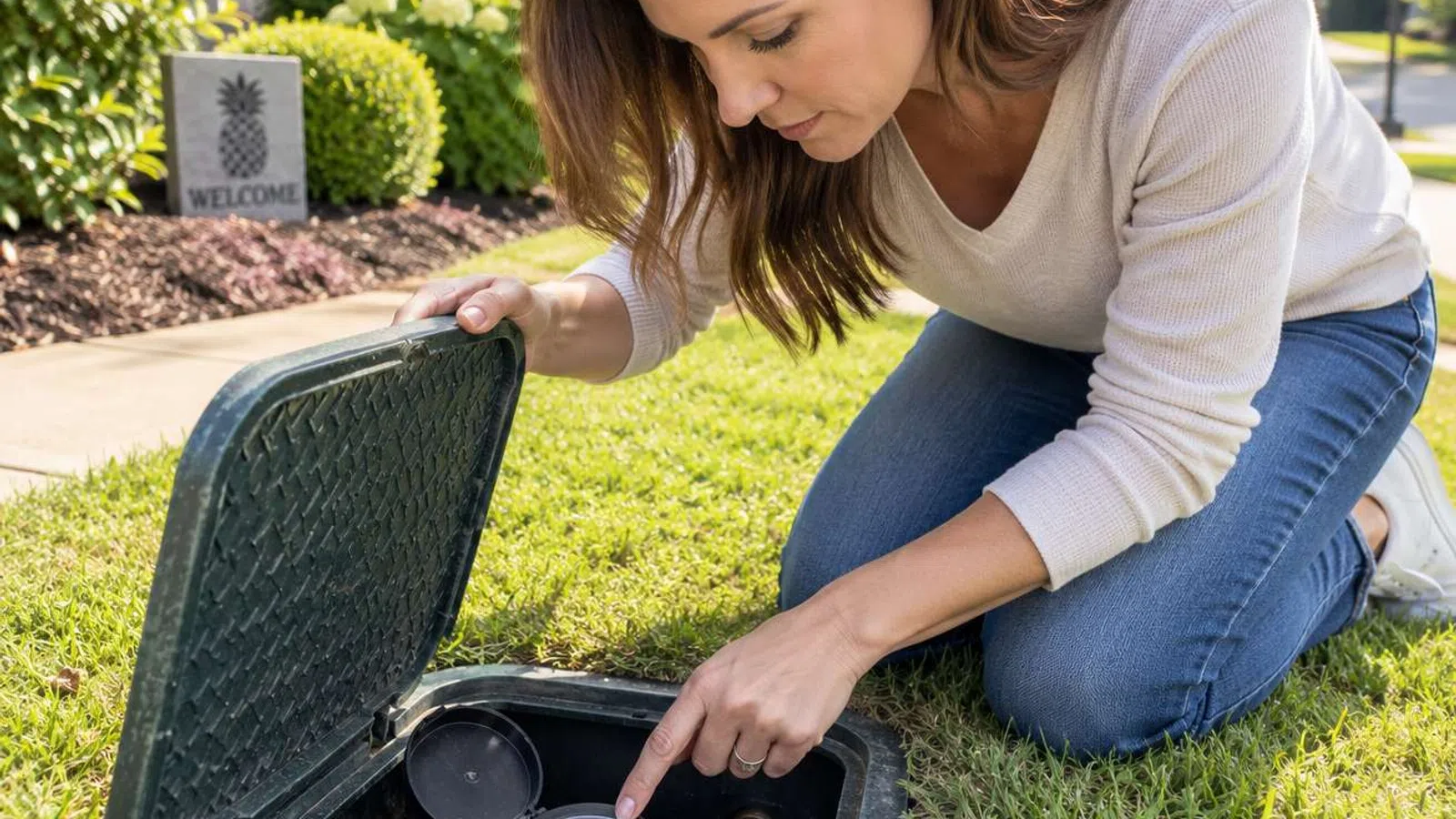
Residential water meters are commonly located outside, often in the front yard near the street, sidewalk, or curb. Look for a ground-level meter box with a metal or plastic cover.
Open the box carefully. Meter boxes can contain insects or other wildlife, and utility equipment should never be forced or damaged.
Inside, you'll generally find either an analog meter with a dial or a digital meter with a numerical display. Some digital meters may need light to activate their display.
How Do I Read My Water Meter?
First, look at the meter's main number.
This represents the cumulative amount of water that has passed through the meter. If you're monitoring household consumption, write the number down—or simply take a picture with your phone. Check it again later and subtract the first reading from the second to determine how much water was used during that period.
Many meters also have a flow or leak indicator. On an analog meter, this may be a small triangle, wheel, or dial. Digital meters may display a flow rate.
This feature is particularly useful when you're looking for a leak.
How Can I Use My Water Meter to Check for a Leak?
Start by making sure nothing in or around your home is intentionally using water.
Turn off faucets, showers, washing machines, dishwashers, irrigation systems, outdoor faucets, and other water-using fixtures. Don't forget appliances such as an ice maker.
Then check the meter.
If the leak/flow indicator is moving—or a digital meter shows water flowing—when everything is supposed to be off, water is going somewhere. That can indicate a plumbing leak.
If you don't see immediate movement, take a picture or write down the exact meter reading. Don't use any water for at least 20-30 minutes and then check it again. For an even more sensitive test, you can wait an hour.
If the meter reading increased even though no water was intentionally used, you likely have water flowing somewhere in the plumbing system.
Some leaks are intermittent, so a single test won't necessarily detect every plumbing problem.
My Water Meter Is Moving. Now What?
Don't panic, but don't ignore it either.
Start with the easy-to-find possibilities. Check toilets for continuous running, dripping faucets, outdoor hose connections, appliances, the water heater, irrigation equipment, and accessible pipes.
Toilets are especially important because a leaking flapper can allow water to run without creating an obvious puddle.
Next, look around your home for less obvious warning signs:
Water stains on walls or ceilings. Damp cabinets. Musty odors. Warped flooring. Peeling paint. Unexplained wet areas in the yard. Reduced water pressure.
These clues can help a plumber narrow down where water may be escaping.
If you can't identify the source, that's when professional water leak detection becomes important.
Could the Leak Be Underground?
Yes.
The water line between the meter and your house can also develop a leak. You might notice an unusually wet or soft section of lawn, standing water when it hasn't rained, or unexplained meter activity.
For homeowners in Dallas and parts of the surrounding area served by Paulding County Water, the county specifically states that a leak between the meter and the house is the homeowner's responsibility and a plumber should be consulted.
Paulding County Water currently serves customers in communities including Dallas and Acworth, making this particularly relevant for homeowners in our North Paulding service area.
Don't Wait for a Small Leak to Become an Emergency
One of the biggest mistakes homeowners can make is assuming that because they don't see water, they don't have a leak.
Water can escape behind walls, underneath floors, in crawl spaces, underground, or from fixtures that quietly send the wasted water down a drain.
Over time, a plumbing leak can contribute to damaged drywall, flooring, cabinetry, insulation, and other building materials.
That's why checking your water meter is such a useful homeowner habit.
Guardian Can Help You Find the Source
Reading your water meter can tell you that water is moving when it shouldn't be. It can't always tell you where the water is going or why.
That's where professional plumbing diagnosis comes in.
Guardian Home Experts provides plumbing and leak-related services from our Cartersville location for homeowners throughout Cartersville, Acworth, Dallas, Bartow County, North Paulding, and surrounding Northwest Georgia communities. Our approach is to identify the source of the problem, explain what we find, and give you clear options for addressing it.
If your meter indicates unexplained water usage, your water bill suddenly jumps, you notice water stains or damp areas, or you have an active plumbing leak, don't wait for the damage to get worse.
Check the meter. Find the source. Fix the problem.
Quality work. Quick service. Exceptional value.
Guardian Home Experts—helping homeowners catch plumbing problems before a small leak becomes a big one