
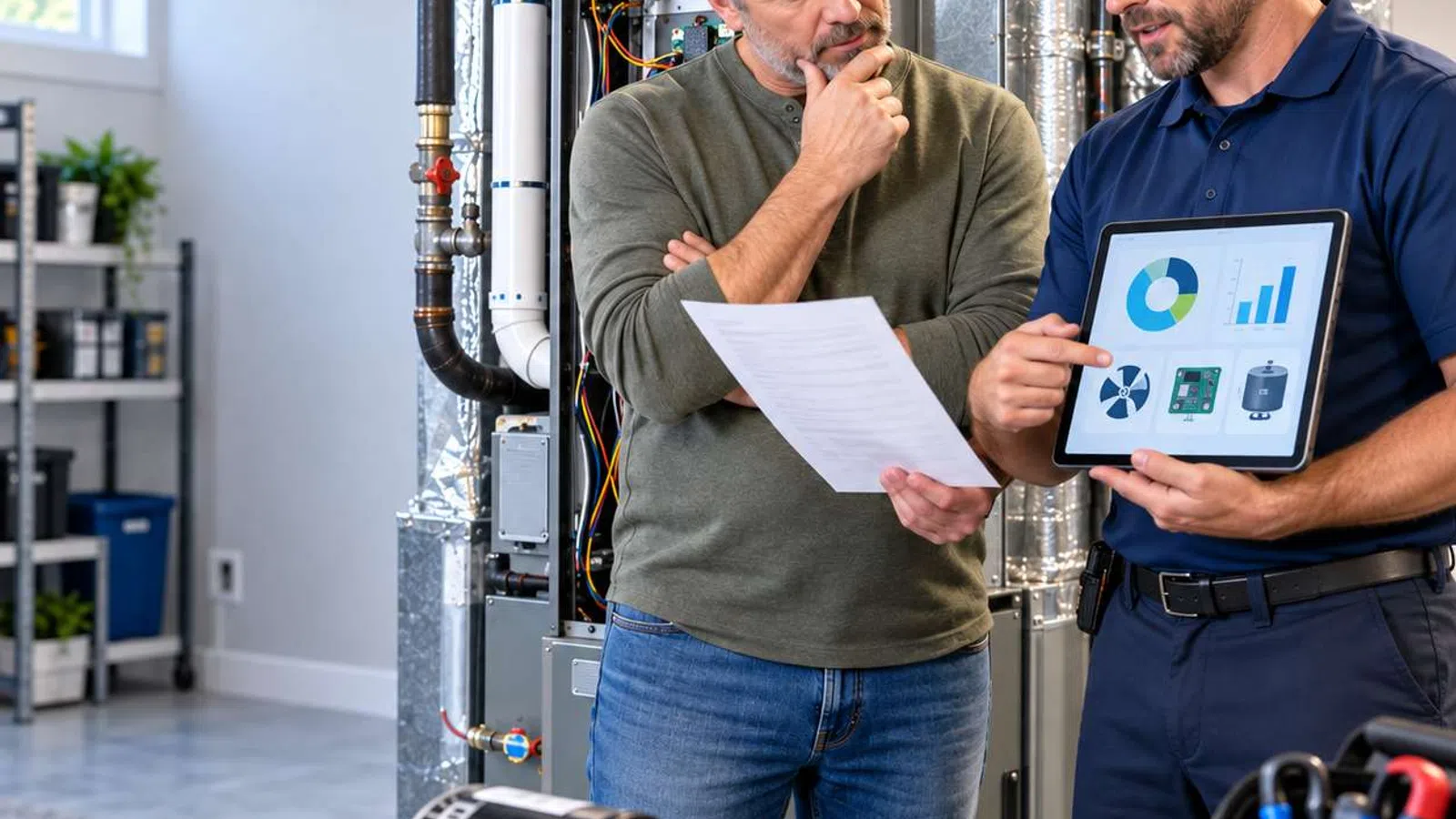
If your last HVAC repair bill made you do a double take, you're not alone — and you're probably not being overcharged. At Guardian Home Experts, we hear this question constantly from homeowners across Metro Atlanta, Marietta, Kennesaw, and Acworth, and there's almost always a reasonable explanation behind it. Here's what's actually driving furnace and AC repair costs today, and how to make sure you're paying a fair price and not getting taken advantage of.
You're Comparing Today's Price to a Memory From 10 Years Ago
The most common reason for sticker shock isn't dishonest pricing — it's outdated expectations. Most homeowners don't think about their HVAC system until something breaks, and for many, that means the last repair or replacement happened five, even ten years ago. Since then, manufacturing and supply costs have climbed significantly, and so has the cost of skilled labor and technical expertise. A repair that felt reasonable a decade ago simply costs more today, and that increase is largely driven by what manufacturers charge us for parts and equipment — not arbitrary markups.
The Hidden Costs Most Homeowners Never See Coming
Rising parts and labor costs are only part of the story. In our experience, some of the most underestimated expenses come from what we find once we actually open up a system: improperly sized ductwork, outdated electrical connections, and installations that were never brought up to code in the first place. Correcting a previous contractor's shortcuts isn't optional — it's often necessary to deliver a system that actually performs safely and efficiently.
A Real Example: When "Just Fix It" Isn't Safe
We once had a customer with a rusted flue pipe on their furnace who initially didn't want to pay for the repair. On the surface, it looked like an unnecessary expense. But a compromised flue pipe can allow carbon monoxide to enter the home instead of venting safely outside — a genuinely life-threatening risk. Once we explained the danger and showed them exactly what we were seeing, the decision was easy. Their family's safety mattered more than saving a few hundred dollars, and that's the kind of conversation we have more often than you'd think. For more details, read about The Silent Threat- Carbon Monoxide.
Two Kinds of Companies to Watch Out For
When it comes to avoiding overcharges, we see two problems on opposite ends of the spectrum:
Large, private-equity-owned companies that price jobs to hit aggressive revenue targets — sometimes charging nearly double what a fair, locally-owned business would charge for the same repair.
Rock-bottom estimates from companies racing to win the job on price alone. These often come with no-name equipment, weak warranties, and installation shortcuts that lead to bigger problems (and bigger bills) down the road.
Neither extreme serves the homeowner. Fair pricing sits in the middle — priced honestly against real material and labor costs, without cutting corners to win business.
What a Trustworthy Estimate Actually Looks Like
One of the easiest ways to protect yourself is knowing what to expect on paper. At Guardian Home Experts, every estimate is itemized by repair or replacement option, with the specific equipment type and full warranty information clearly listed. That means you know exactly what you're paying for — not a vague, bundled number where a company can quietly swap in cheaper parts or equipment to pad their profit margin without you ever knowing.
Before you sign anything, ask:
- Is the equipment brand and model specified, not just "furnace" or "unit"?
- Are parts and labor broken out separately?
- Is the warranty length and coverage clearly stated?
- Does the estimate feel generalized, or does it reflect your actual system?
Quality and Warranty Matter More Than the Lowest Bid
If there's one thing we wish every homeowner understood, it's this: the quality of the team doing the work and the strength of the warranty behind it matter more than the number at the bottom of the estimate. We regularly get calls from customers who chose the cheapest bid, only to end up paying us to fix poor workmanship covered by what amounts to a "tail light warranty" — technically there, but practically worthless.
Licensing is a huge part of this. Plenty of HVAC companies operate without proper licensing, and they can afford to charge less because they don't carry the qualifications, support teams, or accountability that licensed, established companies do. They're not built for long-term customer relationships — they're built to get paid and move on to the next job. That business model almost always costs homeowners more in the long run.
How Guardian Home Experts Helps You Avoid Overpaying
We back this up with real guarantees, not just talk. If you're facing a cracked heat exchanger diagnosis or considering a full system replacement, we offer a free second opinion — because that diagnosis, in particular, gets misused far too often. And if you already have an in-hand quote from a comparable licensed company for a new HVAC system, we'll meet or beat that price by up to $500.
If your recent repair bill left you with questions, or you want a second opinion before committing to a big replacement, reach out to Guardian Home Experts. We serve homeowners throughout Metro Atlanta, Marietta, Kennesaw, and Acworth, and we'd rather explain the "why" behind your invoice than leave you guessing.